What Challenges Are Solved by Remote Contractor Management?
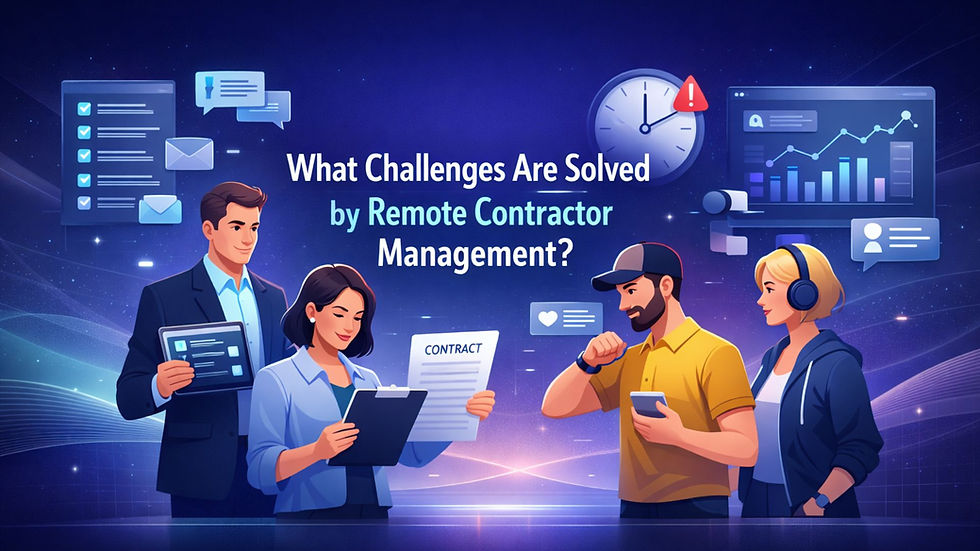
How do businesses keep remote contractors productive, accountable, and aligned without daily in-person oversight? This is where Remote Contractor Management becomes essential. It helps organizations overcome communication gaps, track performance, ensure compliance, and maintain consistent output across distributed teams. By implementing structured systems and tools, businesses can turn remote work challenges into measurable success.
Why Is Managing Remote Contractors Challenging?
Remote contractors offer flexibility and cost efficiency, but they also introduce complexities that traditional workforce models don’t face. Common issues include:
Lack of real-time visibility into work progress
Communication delays across time zones
Difficulty in maintaining accountability
Security risks with distributed access
Inconsistent quality of deliverables
Without a proper management approach, these challenges can quickly impact productivity and business outcomes.
1. How Does It Improve Communication and Collaboration?
One of the biggest hurdles in remote work is fragmented communication. Remote contractor management solves this by introducing structured communication systems.
Key solutions include:
Centralized communication platforms
Scheduled check-ins and updates
Clear documentation of tasks and expectations
When communication becomes organized, misunderstandings decrease, and teams collaborate more effectively even across different regions.
2. How Does It Ensure Accountability and Performance Tracking?
Tracking contractor productivity can feel like guesswork without proper tools. Effective management systems provide visibility into:
Task completion rates
Time spent on projects
Milestone achievements
This transparency helps managers evaluate performance fairly and ensures contractors remain accountable. It also enables data-driven decisions rather than relying on assumptions.
3. How Does It Solve Time Zone and Scheduling Issues?

Working with global contractors often means juggling multiple time zones. Without coordination, this can lead to delays and missed deadlines.
Remote contractor management addresses this by:
Setting overlapping working hours
Using asynchronous communication tools
Defining clear deadlines instead of fixed schedules
This flexibility ensures work continues smoothly without requiring everyone to be online at the same time.
4. How Does It Help Scale Remote Teams Efficiently?
As businesses grow, managing more contractors becomes increasingly complex. A structured approach allows companies to scale without chaos.
Key benefits:
Streamlined onboarding processes
Automated task allocation
Easy performance monitoring
For example, businesses expanding a remote sales team can maintain consistent workflows and performance tracking, ensuring growth doesn’t lead to inefficiencies.
5. How Does It Maintain Work Quality and Consistency?
Maintaining consistent output from different contractors can be difficult. Standardized workflows and clear guidelines help solve this issue.
Best practices include:
Defining quality benchmarks
Providing detailed project briefs
Conducting regular reviews and feedback sessions
These steps ensure that every contractor delivers work aligned with company standards, regardless of their location.
6. How Does It Strengthen Data Security and Compliance?

Remote contractors often access sensitive company data, increasing security risks. Management systems help mitigate these risks through:
Controlled access permissions
Activity monitoring
Secure file-sharing platforms
Solutions like Empmonitor support businesses in maintaining transparency while safeguarding critical data. This builds trust without compromising security.
7. How Does It Enhance Employee and Contractor Experience?
Contractors who feel supported and informed perform better. Management systems create a more structured and positive work environment.
This includes:
Clear expectations
Timely feedback
Recognition of achievements
Businesses that effectively manage remote employees and contractors together create a cohesive work culture, even in a distributed setup.
8. How Does It Improve Cost Efficiency?
Hiring remote contractors is often more cost-effective, but poor management can lead to wasted resources.
Remote contractor management helps optimize costs by:
Eliminating redundant tasks
Reducing project delays
Ensuring better resource allocation
When work is tracked and optimized, businesses get maximum value from every contractor.
Also, watch this video - Manage Remote Work Easily With Powerful Monitoring Software: EmpMonitor
Conclusion
Remote contractor management is no longer optional; it’s a necessity for businesses operating in a global, digital-first environment. From improving communication and accountability to ensuring security and scalability, it solves the most pressing challenges of remote work. By implementing the right strategies and tools, companies can unlock the full potential of distributed talent while maintaining efficiency and control. Ultimately, success in Managing Remote Contractors depends on structure, transparency, and consistent optimization.
FAQs
Q1. What is remote contractor management?
It is the process of organizing, monitoring, and optimizing the work of contractors who operate remotely to ensure productivity and alignment with business goals.
Q2. Why is it important for businesses?
It helps maintain accountability, improve communication, and ensure consistent performance across distributed teams.
Q3. What tools are used for managing remote contractors?
Common tools include time tracking software, project management platforms, and communication tools that centralize workflows.
Q4. How can companies ensure productivity in remote contractors?
By setting clear goals, tracking performance metrics, and maintaining regular communication.
Q5. What are the biggest challenges solved by remote contractor management?
It addresses communication gaps, performance tracking issues, time zone differences, security concerns, and scalability challenges.


Comments