What Is A Flexible Work Environment? Benefits, Challenges, and Best Practices
- jamilsporer62
- May 18
- 4 min read
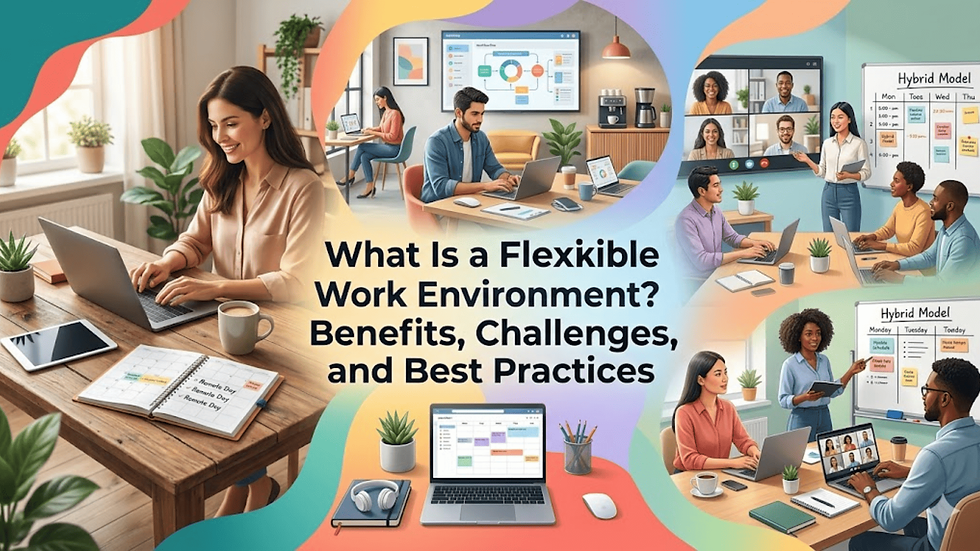
Have you ever wondered why more employees today value freedom and work-life balance just as much as salary? Or why businesses are rapidly shifting away from rigid office schedules? The answer often comes down to one major workplace trend: flexibility.
For businesses, flexibility can improve productivity, employee satisfaction, and retention. For employees, it often creates better balance between personal and professional responsibilities.
A flexible work environment is a workplace setup that gives employees more control over when, where, and sometimes how they work. Instead of following strict office hours or fixed locations, workers may have options such as remote work, hybrid schedules, flexible shifts, or compressed workweeks.
Why Workplace Flexibility Matters Today
Modern workplaces are changing because employee expectations have changed. People increasingly value flexibility, reduced commuting stress, and greater autonomy.
Organizations that embrace adaptable work arrangements often experience benefits such as:
Higher employee satisfaction
Better work-life balance
Reduced burnout and absenteeism
Improved productivity and focus
Greater ability to attract skilled talent
At the same time, businesses benefit from stronger employee engagement and lower turnover rates.
Types of Flexible Work Arrangements
Not every company uses the same model. Workplace flexibility can take different forms depending on the organization’s needs.
Remote Work
Employees work entirely from home or another location outside the office. This setup is especially common in technology, marketing, and customer support roles.
Hybrid Work
Workers split their time between office and remote locations. For example, employees may work in the office three days a week and remotely for two days.
Flexible Working Hours
Instead of a fixed 9-to-5 schedule, employees choose when to begin and end work, as long as tasks are completed on time.
Compressed Workweeks
Some organizations allow employees to complete full weekly hours in fewer days, such as working four longer days instead of five.
Job Sharing
Two employees divide the responsibilities of one full-time role, helping organizations support better work-life balance.
Benefits of a More Adaptable Workplace

A more flexible workplace creates advantages for both employers and employees.
Better Employee Satisfaction
Employees who have greater control over their schedules often feel more trusted and valued. This can improve morale and workplace motivation.
Increased Productivity
Many employees perform better when working during their most productive hours or in environments with fewer distractions.
Lower Stress Levels
Reduced commuting time and schedule flexibility can significantly improve mental well-being.
Stronger Talent Retention
Businesses that offer flexibility are often more successful in keeping experienced employees and attracting new candidates.
Improved Business Continuity
Flexible work policies can help organizations continue operating smoothly during emergencies or disruptions.
Challenges Businesses May Face
Although flexibility offers many advantages, it also comes with challenges.
Communication Gaps
Teams working remotely or on varied schedules may struggle with collaboration if communication tools are ineffective.
Performance Tracking
Managers may find it harder to evaluate employee progress without clear goals and accountability systems.
Team Culture Concerns
Some companies worry about reduced employee connection when workers spend less time together physically.
To overcome these issues, businesses must create clear expectations and maintain regular communication.
How Companies Can Build Better Workplace Flexibility
Creating an effective system requires planning rather than simply allowing remote work.
Here are practical strategies organizations can follow:
Set clear expectations Employees should understand goals, deadlines, and communication standards.
Use the right technology Collaboration tools, project management software, and video conferencing platforms improve teamwork.
Focus on results instead of hours Measuring performance by completed work often produces better outcomes than tracking time alone.
Encourage transparency Regular updates help teams stay aligned and avoid confusion.
Provide manager training Leaders should understand how to supervise distributed teams effectively.
Organizations that prioritize trust and accountability often build a healthier workplace culture.
How to Improve Employee Discipline and Accountability

Many employers worry that flexibility might reduce productivity. However, success often depends on leadership and expectations.
One effective strategy is learning how to improve work ethic among employees through recognition, clear goals, regular feedback, and accountability systems. Workers who understand expectations are often more motivated and responsible, regardless of where they work.
Encouraging ownership, time management, and open communication also strengthens team performance in modern workplaces.
After implementing supportive systems and performance expectations, businesses often notice measurable improvements in engagement and collaboration. A flexible work environment becomes most successful when employees are trusted while still being accountable for results.
You can also watch this video: Emp Monitor | Boost Workplace Productivity with Employee Monitoring Software.
Summary
A flexible work environment has become an important workplace model for businesses aiming to improve employee satisfaction, productivity, and retention. By offering options such as remote work, hybrid schedules, or flexible hours, organizations can support better work-life balance while maintaining efficiency. However, success depends on clear communication, accountability, and realistic expectations. Companies that implement flexibility thoughtfully are more likely to create motivated teams, stronger collaboration, and sustainable long-term growth.
FAQ
What is a flexible workplace?
A workplace that allows employees more freedom in choosing when, where, or how they work instead of following rigid schedules.
What are the benefits of workplace flexibility?
Key benefits include improved productivity, better work-life balance, reduced burnout, stronger employee retention, and higher job satisfaction.
Is workplace flexibility good for businesses?
Yes, many organizations experience lower turnover, improved employee morale, and increased productivity when flexibility is managed effectively.
Can flexible work reduce productivity?
Not necessarily. Clear goals, communication tools, and accountability systems often help employees stay productive.
How can employers make flexible work successful?
Employers should focus on clear expectations, strong communication, performance tracking, and employee support.


Comments