What Is Considered Overtime Under Labor Laws? Explained Clearly
- jamilsporer62
- Mar 24
- 3 min read
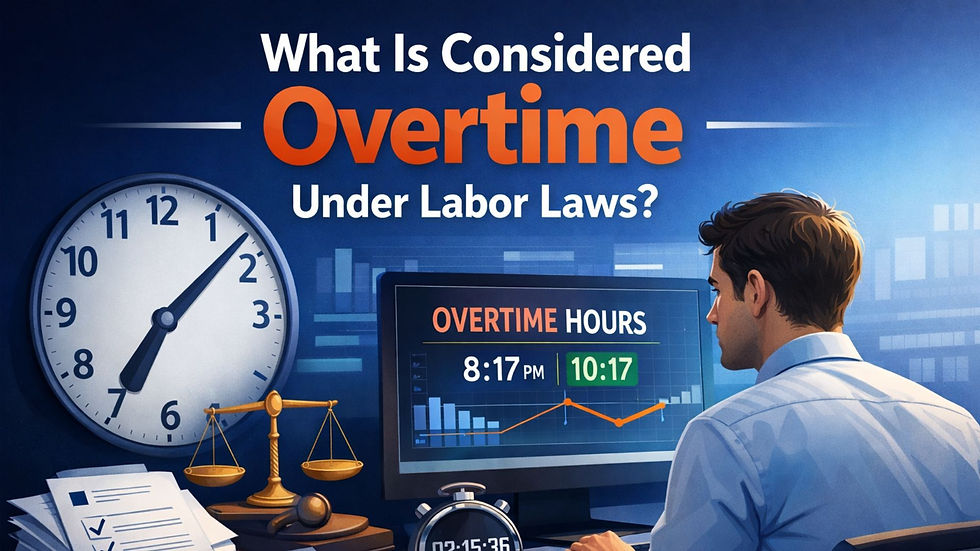
Are you working extra hours but unsure if you should be paid more? It’s a common question among employees and employers alike: What is considered overtime under labor laws? The short answer typically refers to any hours worked beyond the standard workweek, usually 40 hours, and must be compensated at a higher rate.
However, the exact rules can vary depending on your country, industry, and employment type. Understanding overtime isn’t just about compliance; it’s about fair pay, employee satisfaction, and efficient workforce management.
What Does “Overtime” Mean Legally?
Overtime is defined as the additional hours an employee works beyond their regular working schedule. In many countries, including the U.S., under the Fair Labor Standards Act (FLSA), overtime applies when:
An employee works more than 40 hours in a workweek
They are classified as “non-exempt” employees
They are entitled to extra pay for additional hours
Typically, overtime pay is calculated at 1.5 times the regular hourly rate, often called “time and a half.”
Who Qualifies for Overtime Pay?
Not all employees are eligible for overtime. Labor laws categorize workers into two main groups:
1. Non-Exempt Employees
These employees are eligible for overtime pay. They are usually:
Hourly workers
Employees earning below a certain salary threshold
Workers performing non-managerial tasks
2. Exempt Employees
These employees are not eligible for overtime. They typically include:
Executives and managers
Certain professionals (like doctors or lawyers)
Employees earning above a defined salary level
Understanding this distinction is crucial for both compliance and payroll accuracy.
How Is Overtime Calculated?
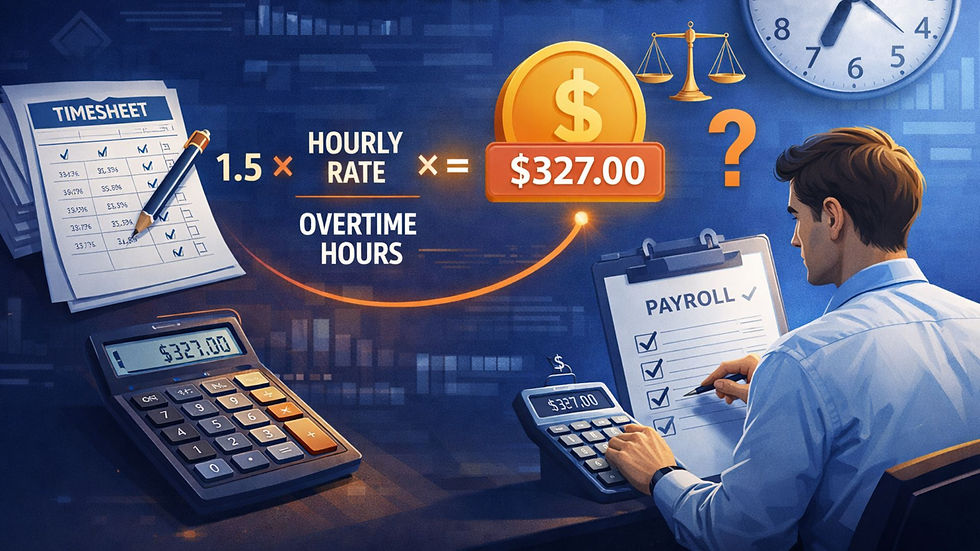
Overtime calculation may seem simple, but it can vary depending on local laws.
Standard Calculation:
Regular hours: Up to 40 hours/week
Overtime hours: Any time beyond 40 hours
Pay rate: 1.5× the regular hourly wage
Example:
If an employee earns $20/hour and works 45 hours:
Regular pay: 40 × $20 = $800
Overtime pay: 5 × $30 = $150
Total pay: $950
Some regions may also require double pay for holidays or extended overtime hours.
Why Tracking Work Hours Accurately Matters
Accurate time tracking is essential to ensure fair compensation and legal compliance. Without proper systems, companies risk:
Underpaying employees
Facing legal penalties
Damaging employee trust
This is where attendance management software becomes valuable. It helps businesses monitor working hours in real time, calculate overtime accurately, and maintain transparent records.
Common Overtime Rules Across Different Regions
While the 40-hour rule is common, labor laws differ globally:
United States: Overtime after 40 hours/week
India: Typically after 9 hours/day or 48 hours/week (varies by state)
European Union: Regulated working hours with strict limits on weekly work time
Employers must always follow local labor regulations to remain compliant.
What Counts as Working Time?
Not all time spent at work qualifies as “working hours.” Generally included:
Time spent performing job duties
Required meetings or training sessions
Work-related travel (in some cases)
Usually excluded:
Breaks or meal periods (if unpaid)
Commute time (with exceptions)
Clear policies help avoid confusion and disputes.
How Overtime Impacts Productivity
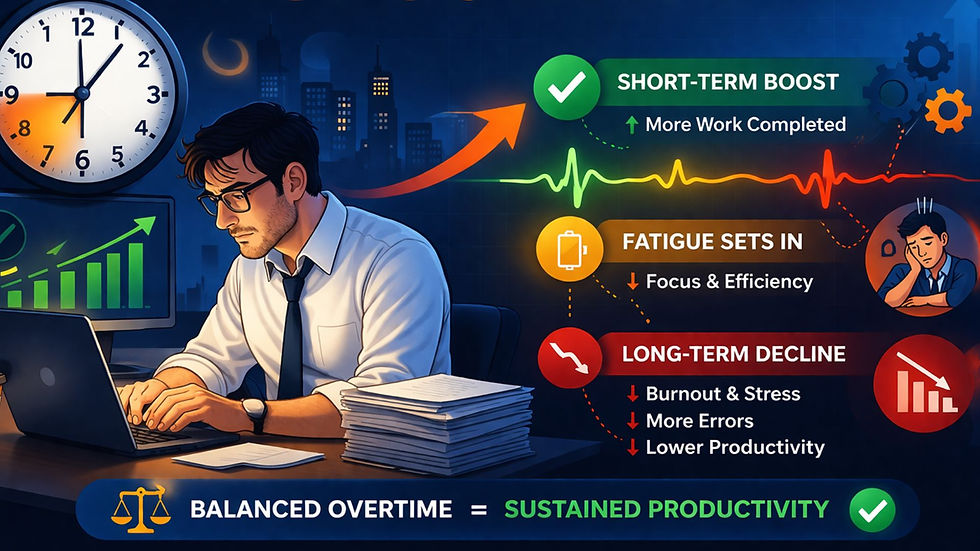
While overtime can help meet deadlines, excessive overtime often leads to:
Employee burnout
Reduced efficiency
Increased errors
Smart organizations focus on workload balancing to distribute tasks effectively and avoid overworking employees. This not only improves productivity but also enhances employee well-being.
Best Practices for Managing Overtime
To handle overtime effectively, companies should:
1. Set Clear Policies
Define when overtime applies and how it is approved.
2. Monitor Work Hours
Use tools and systems to track employee time accurately.
3. Limit Excessive Overtime
Encourage regular working hours to prevent burnout.
4. Automate Tracking
Solutions like EmpMonitor help automate time tracking and ensure compliance with labor laws.
5. Communicate Transparently
Employees should clearly understand their rights and compensation.
Common Mistakes Employers Should Avoid
Many organizations unknowingly violate overtime laws. Common mistakes include:
Misclassifying employees as exempt
Not tracking hours properly
Ignoring local labor law variations
Failing to pay for all eligible hours worked
Avoiding these errors protects both the business and its employees.
Also, watch this video - Emp Monitor | Boost Workplace Productivity with Employee Monitoring Software
Wrapping Up
Overtime laws are designed to protect employees and ensure fair compensation for extra work. For employers, understanding and applying these rules correctly helps avoid legal risks and maintain a positive work environment. By managing work hours effectively and compensating employees fairly through proper overtime pay, businesses can build trust, improve productivity, and stay compliant.
FAQs
1. What is the standard overtime rate?
Most commonly, it is 1.5 times the regular hourly wage.
2. Can salaried employees get overtime?
Yes, if they are classified as non-exempt under labor laws.
3. Is overtime mandatory for employers to pay?
Yes, if employees meet the eligibility criteria defined by law.
4. How can companies track overtime effectively?
Using automated tools and time-tracking systems ensures accuracy and compliance.



Comments