What Is Insider Threat Detection Software and How Does It Work?
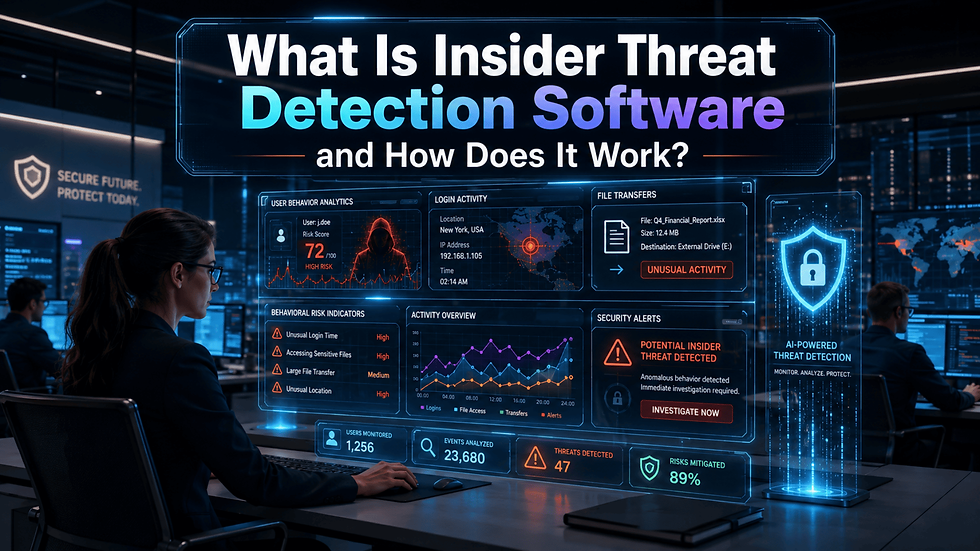
Have you ever wondered who poses the greatest risk to your organization's sensitive data? While many businesses focus on external cybercriminals, some of the most damaging security incidents originate from within the organization itself.
Insider threat detection software is a security solution designed to identify, monitor, and prevent risks caused by employees, contractors, vendors, or other authorized users who have access to company systems and data. It works by analyzing user behavior, detecting unusual activities, and alerting security teams before potential threats become serious incidents.
Whether the threat is malicious, negligent, or accidental, organizations need effective tools to safeguard critical information. Understanding how these solutions work can help businesses strengthen their security posture and reduce the risk of costly breaches.
Why Are Insider Threats a Growing Concern?
Modern workplaces rely heavily on digital systems, cloud platforms, and remote work environments. As employees gain access to more sensitive information, the potential for internal security risks increases.
Common insider threats include:
Unauthorized data access
Data theft or exfiltration
Credential misuse
Sharing confidential information
Accidental exposure of sensitive files
Violations of company security policies
Unlike external attackers, insiders often already possess legitimate access credentials, making their activities harder to detect using traditional security measures.
How Does Insider Threat Detection Software Work?
Organizations use advanced monitoring technologies to identify unusual user behavior and security risks.
1. User Activity Monitoring
The software continuously tracks activities such as:
File access
File transfers
Application usage
Login attempts
Email activities
Device connections
This visibility helps security teams understand how employees interact with company resources.
2. Behavioral Analytics
Modern solutions establish a baseline of normal user behavior. When activities deviate significantly from established patterns, the system generates alerts.
Examples include:
Accessing sensitive files outside normal work hours
Downloading unusually large volumes of data
Logging in from unfamiliar locations
Attempting to access restricted systems
3. Risk Scoring
Many platforms assign risk scores to users based on their actions. Higher-risk activities receive greater attention from security teams, helping organizations prioritize investigations.
4. Automated Alerts and Response
When suspicious behavior is detected, the system can:
Notify administrators
Restrict user access
Trigger security workflows
Generate compliance reports
This allows organizations to respond quickly before damage occurs.
Key Features Businesses Should Look For

Selecting the right solution requires understanding the most important capabilities.
Real-Time Monitoring
Continuous monitoring helps detect suspicious behavior as it happens rather than after a security incident has already occurred.
User and Entity Behavior Analytics (UEBA)
Behavioral analytics identifies subtle anomalies that traditional security tools may overlook.
Data Loss Prevention Integration
Combining threat detection with data protection helps prevent unauthorized movement of sensitive information.
Compliance Reporting
Many industries must comply with regulations regarding data security and privacy. Reporting features simplify audits and compliance management.
Incident Investigation Tools
Detailed logs and activity histories make it easier to investigate suspicious behavior and determine the root cause of incidents.
Benefits of Implementing Insider Threat Solutions
Organizations gain multiple advantages from proactive threat monitoring.
Improved Data Protection
Sensitive company information remains better protected against theft, misuse, and accidental exposure.
Reduced Security Risks
Early detection allows security teams to address issues before they escalate into major incidents.
Better Regulatory Compliance
Many regulations require organizations to monitor access to sensitive information and maintain audit trails.
Increased Operational Visibility
Managers gain deeper insights into how systems and resources are being used across the organization.
Enhanced Security Culture
Employees become more aware of security responsibilities when organizations establish clear monitoring and protection practices.
Common Use Cases Across Industries
Different sectors use insider threat monitoring for various purposes.
Financial Services
Banks and financial institutions monitor access to customer data, transactions, and confidential records.
Healthcare
Healthcare providers protect patient information and ensure compliance with privacy regulations.
Government Agencies
Government organizations safeguard classified information and monitor privileged access.
Technology Companies
Technology firms protect intellectual property, source code, and research data from unauthorized access.
Best Practices for Effective Insider Threat Management
Technology alone cannot eliminate insider risks. Organizations should combine software with strong security practices.
Establish Clear Security Policies
Employees should understand acceptable usage guidelines and data protection responsibilities.
Provide Regular Training
Security awareness training helps reduce accidental insider incidents and improves compliance.
Limit Access Privileges
Grant users only the permissions necessary to perform their job responsibilities.
Monitor High-Risk Activities
Focus attention on sensitive data access, large file transfers, and unusual login behavior.
Conduct Regular Audits
Periodic reviews help identify vulnerabilities and improve security controls over time.
Supporting Workforce Visibility Beyond Security

Many organizations also implement field force management software to improve workforce productivity, location tracking, task management, and operational visibility. While these platforms primarily focus on workforce efficiency, they can complement broader organizational oversight strategies by providing valuable activity insights and accountability measures.
Challenges Organizations May Face
Despite their benefits, insider threat programs can encounter obstacles.
Privacy Concerns
Organizations must balance security monitoring with employee privacy rights.
False Positives
Behavioral monitoring systems may occasionally flag legitimate activities as suspicious.
Resource Requirements
Effective monitoring requires skilled personnel, proper configuration, and ongoing management.
Evolving Threats
Insider risks continue to change, requiring organizations to regularly update their security strategies.
You can also watch this video: EmpMonitor: All-In-One Workforce Management Solution | Employee Monitoring Software
Summary
Insider threats remain one of the most difficult security challenges facing modern organizations. By monitoring user behavior, detecting anomalies, and providing real-time alerts, insider threat detection solutions help businesses identify risks before they become costly incidents. Insider threat detection software plays a critical role in helping organizations gain visibility into user activities and respond quickly to suspicious behavior.
Successful implementation requires more than technology alone. Clear policies, employee training, access controls, and continuous monitoring work together to create a stronger security environment.
Frequently Asked Questions
What is an insider threat?
An insider threat is a security risk that originates from someone with authorized access to an organization's systems, data, or resources.
Who can be considered an insider?
Employees, contractors, consultants, vendors, and business partners with legitimate access can all be considered insiders.
Can insider threats be accidental?
Yes. Many insider incidents occur due to negligence, human error, or lack of security awareness rather than malicious intent.
Why is insider threat detection important?
It helps organizations identify suspicious behavior early, prevent data breaches, protect sensitive information, and maintain regulatory compliance.
What industries benefit most from insider threat monitoring?
Healthcare, finance, government, technology, manufacturing, and any organization handling sensitive data can benefit significantly from insider threat monitoring solutions.


Comments