Employee Time Tracking Software for Remote, Hybrid, and On-Site Teams
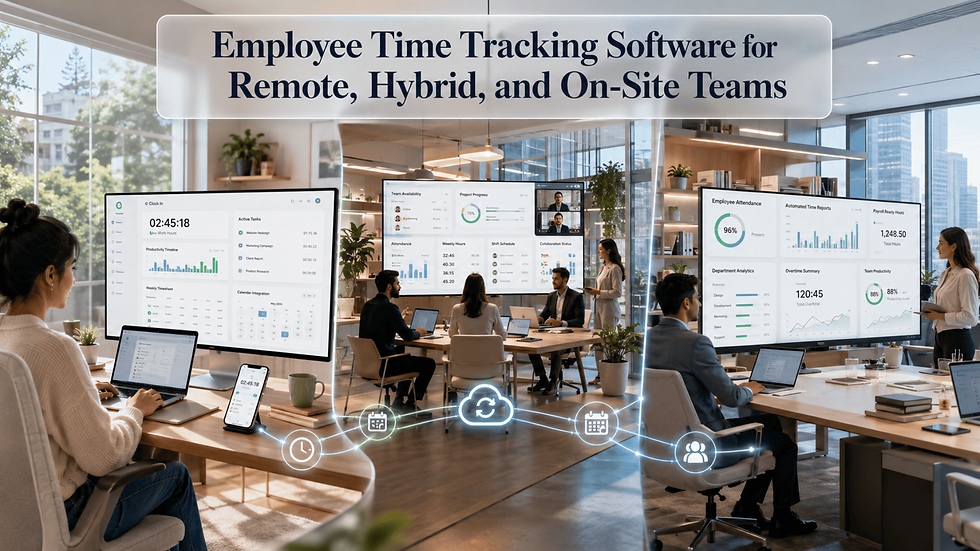
Whether your workforce operates remotely, in the office, or follows a hybrid schedule, keeping track of working hours can quickly become complicated. A reliable digital tracking solution helps businesses record attendance, monitor productivity, simplify payroll processing, and maintain compliance without relying on manual spreadsheets.
In short, modern time tracking systems provide real-time visibility into employee work hours while reducing administrative effort and improving operational efficiency.
What Is an Employee Time Tracking Solution?
An employee time tracking software solution is a digital platform designed to record when employees start work, take breaks, complete tasks, and finish their shifts. It automates attendance management and generates accurate reports that support payroll, workforce planning, and performance analysis.
Unlike traditional punch cards or manual registers, today's solutions offer cloud-based access, mobile compatibility, and automated reporting for businesses of every size.
Why Do Businesses Need Better Time Tracking?
As organizations become more flexible, managers need greater visibility without increasing administrative work.
Common challenges include:
Inaccurate timesheets
Payroll errors
Missed overtime calculations
Attendance disputes
Reduced accountability
Difficulty managing distributed teams
Digital tracking tools solve these problems by creating a transparent and consistent record of employee activity.
Key Features to Look For
Choosing the right platform depends on your organization's workflow. Look for features that simplify both employee and manager experiences.
Automated Time Capture
Employees can clock in and out using desktops, mobile devices, or biometric systems, eliminating manual entry errors.
Attendance Management
Automatic attendance records reduce HR workload while improving reporting accuracy.
Real-Time Dashboards
Managers can instantly view active employees, working hours, shift status, and attendance trends.
Project and Task Tracking
Businesses that bill clients or manage multiple projects benefit from tracking time against specific assignments.
Payroll Integration
Accurate hour tracking helps payroll systems calculate salaries, overtime, leave balances, and deductions automatically.
Mobile Accessibility
Remote employees can securely record work hours regardless of location.
Benefits for Remote, Hybrid, and Office Teams

Different work models require different levels of visibility, but the benefits remain consistent.
Remote Teams
Managers gain confidence that work schedules are being followed without relying on constant communication.
Hybrid Teams
Organizations maintain consistent attendance records regardless of where employees work each day.
On-Site Teams
Digital attendance replaces manual registers and reduces human error during shift changes.
Across all work environments, employee time tracking software helps improve transparency while reducing administrative complexity.
How Time Tracking Improves Business Performance
Accurate workforce data supports better decision-making beyond attendance management.
Organizations can:
Optimize staffing levels
Reduce unnecessary overtime
Improve project planning
Identify scheduling conflicts
Increase payroll accuracy
Enhance employee accountability
Historical reports also help identify long-term productivity trends, making workforce planning more data-driven.
Security and Compliance Matter
Employee work records often contain sensitive information, making data protection essential.
Organizations should choose platforms that offer:
Role-based permissions
Secure cloud storage
Data encryption
Audit logs
Compliance reporting
Backup and recovery options
Many businesses also integrate insider threat detection software alongside workforce management solutions to identify unusual employee behavior, strengthen security policies, and reduce operational risks without disrupting everyday work.
Tips for Successful Implementation

Technology alone doesn't guarantee success. Adoption depends on clear communication and thoughtful planning.
Follow these best practices:
Explain why the system is being introduced.
Train employees before rollout.
Keep attendance policies transparent.
Automate repetitive administrative tasks.
Regularly review reports for improvement opportunities.
Gather employee feedback after implementation.
A collaborative rollout encourages higher adoption and reduces resistance to change.
How to Choose the Right Solution
Before selecting a platform, evaluate your business requirements.
Consider:
Company size
Number of employees
Remote workforce support
Payroll compatibility
Reporting capabilities
Mobile applications
Scalability
Customer support
Security standards
The ideal solution should grow alongside your business while remaining easy for employees to use every day.
Later, as reporting and workforce insights become increasingly important, employee time tracking software provides organizations with the visibility needed to improve efficiency, reduce costs, and make informed management decisions.
You can also watch this video: How to Manage & Track Your Remote Team’s Hours | EmpMonitor Time Tracking
Summary
Modern businesses need accurate, automated, and secure methods to manage employee work hours across remote, hybrid, and on-site environments. Employee time tracking software simplifies attendance, streamlines payroll, improves operational visibility, and supports better workforce planning. By selecting a scalable solution with strong reporting, security, and integration capabilities, organizations can create a more efficient workplace while reducing administrative effort and improving employee accountability.
Frequently Asked Questions
What is the purpose of time tracking software?
It automatically records employee working hours, simplifies attendance management, improves payroll accuracy, and provides managers with valuable workforce insights.
Can remote employees use time tracking systems?
Yes. Most modern platforms support desktop, web, and mobile applications, allowing employees to securely clock in from virtually any location.
Does time tracking improve productivity?
Yes. Accurate visibility into work hours helps managers optimize schedules, reduce idle time, and improve overall operational efficiency.
Is it suitable for small businesses?
Absolutely. Many solutions are scalable, making them ideal for startups, small businesses, and large enterprises alike.


Comments