How Employee Time Tracking Software Improves Workforce Productivity

How can businesses accurately measure productivity, reduce time wastage, and improve workforce efficiency? The answer often lies in having better visibility into how work hours are utilized.
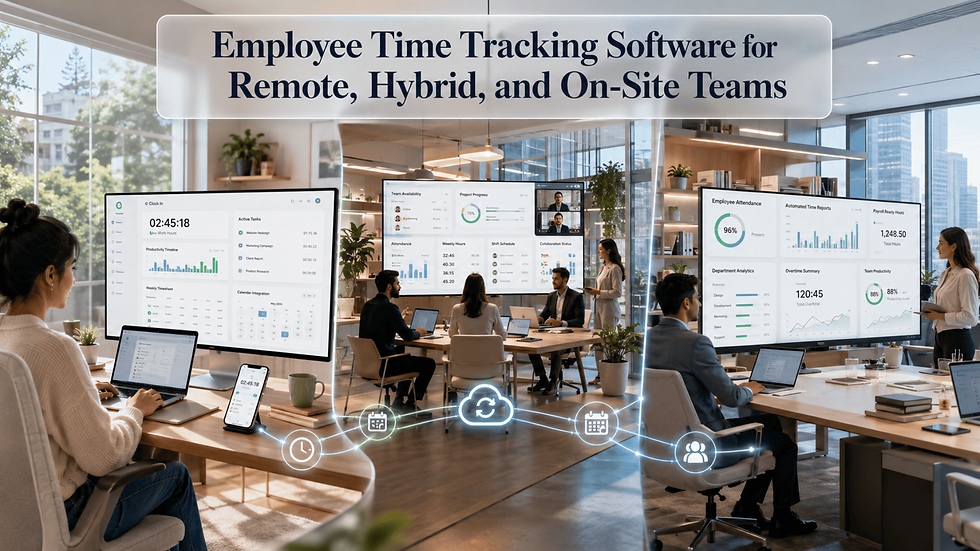
Employee time tracking software helps organizations record working hours, monitor task completion, manage attendance, and gain valuable insights into workforce performance. By providing real-time visibility into employee activities, businesses can make informed decisions, optimize resource allocation, and improve overall productivity.
Whether managing remote teams, field employees, or office-based staff, modern time-tracking solutions offer a practical way to increase accountability while supporting operational growth.
What Is Employee Time Tracking Software?
Employee time tracking software is a digital solution that records employee working hours, tracks attendance, monitors productivity, and helps organizations manage workforce performance more effectively.
These systems replace manual timesheets and spreadsheets with automated tracking tools that provide accurate data and actionable insights.
Common functions include:
Clock-in and clock-out management
Attendance tracking
Timesheet automation
Project and task tracking
Overtime monitoring
Payroll integration
Workforce reporting and analytics
By centralizing workforce data, organizations can reduce administrative work and improve operational accuracy.
Why Is Time Tracking Important for Modern Businesses?
Many organizations struggle with productivity losses caused by inaccurate reporting, inefficient scheduling, and lack of visibility into daily operations.
Time tracking helps businesses:
Improve Accountability
Employees gain a clearer understanding of expectations when work hours and project progress are monitored accurately.
Reduce Payroll Errors
Automated records eliminate many common mistakes associated with manual timesheets and attendance logs.
Enhance Resource Planning
Managers can identify workload imbalances and allocate resources more effectively across teams.
Support Compliance
Accurate records help organizations meet labor regulations and maintain proper documentation for audits.
Key Features to Look for in a Time Tracking Solution

Not all workforce management tools offer the same capabilities. Businesses should evaluate software based on their operational needs.
1. Automated Time Capture
Automatic tracking minimizes manual input and ensures more accurate reporting.
2. Attendance Management
Integrated attendance tools help organizations monitor punctuality, absences, and leave requests.
3. Real-Time Reporting
Live dashboards provide managers with immediate visibility into employee activity and project status.
4. Project-Based Tracking
Organizations can track hours spent on specific tasks, clients, or projects for better cost management.
5. Mobile Accessibility
Mobile apps allow remote and field employees to record work hours from any location.
6. Payroll Integration
Direct payroll connectivity reduces administrative effort and improves payment accuracy.
How Time Tracking Improves Workforce Productivity
Organizations often focus on output without understanding where time is actually being spent. Time tracking creates transparency that helps teams work more efficiently.
Better Time Utilization
Employees become more aware of how they spend their working hours, leading to improved focus and fewer distractions.
Data-Driven Decision Making
Managers gain access to performance metrics that reveal bottlenecks, inefficiencies, and opportunities for improvement.
Increased Project Visibility
Teams can monitor project progress in real time, ensuring deadlines remain on track and resources are properly allocated.
Reduced Administrative Burden
Automation eliminates repetitive manual processes, allowing employees and managers to focus on higher-value work.
Improved Remote Workforce Management
With hybrid and remote work becoming increasingly common, organizations need tools that maintain visibility without micromanagement.
This is where solutions such as live screen monitoring software can complement broader workforce management strategies. When used responsibly and transparently, these tools provide additional insights into workflow patterns, helping managers identify productivity trends and operational challenges.
Benefits for Different Industries
Time tracking solutions provide value across multiple sectors.
Professional Services
Consultants, agencies, and service providers can accurately track billable hours and improve client reporting.
Healthcare
Healthcare organizations can better manage staff schedules, shifts, and compliance requirements.
Construction
Project managers gain visibility into labor hours, job-site attendance, and workforce allocation.
Retail
Retail businesses can optimize staffing levels and reduce unnecessary labor costs.
Logistics and Transportation
Managers can monitor employee schedules and improve operational coordination across locations.
How to Choose the Right Solution

Selecting the right platform requires careful evaluation of business needs.
Consider the following factors:
Company size and workforce structure
Remote or field workforce requirements
Integration capabilities
Reporting and analytics features
Mobile accessibility
Security and compliance standards
Scalability for future growth
A solution should support both current operational requirements and long-term business objectives.
Common Challenges and How to Overcome Them
Employee Resistance
Some employees may view tracking systems negatively. Clear communication about goals and benefits helps build trust and adoption.
Data Accuracy Issues
Organizations should establish consistent policies for time recording and attendance management.
Integration Difficulties
Choosing software with flexible APIs and pre-built integrations can simplify implementation.
Privacy Concerns
Employers should maintain transparency about data collection practices and comply with applicable privacy regulations.
You can also watch this video: How to Use Live Screen Monitoring in EmpMonitor | Step-by-Step Guide
Summary
Modern organizations need accurate workforce data to improve efficiency, control labor costs, and support business growth. Employee time tracking software provides valuable insights into attendance, productivity, project allocation, and workforce performance.
By automating time management processes and delivering actionable analytics, businesses can make smarter decisions, improve accountability, and create more productive work environments. When implemented thoughtfully, time tracking becomes a strategic tool that supports both operational efficiency and employee success.
Frequently Asked Questions
What is employee time tracking software used for?
It is used to record work hours, manage attendance, monitor productivity, automate timesheets, and support payroll processing.
Can time tracking improve productivity?
Yes. It provides visibility into work patterns, helps identify inefficiencies, and encourages better time management.
Is time tracking suitable for remote teams?
Absolutely. Most modern solutions include cloud-based access, mobile apps, and real-time reporting features designed for remote and hybrid work environments.
Does time tracking software integrate with payroll systems?
Many platforms offer payroll integrations that automate wage calculations and reduce administrative workload.
How do businesses choose the right time tracking solution?
Organizations should evaluate features, scalability, reporting capabilities, integration options, mobile accessibility, and security requirements before making a decision.


Comments